Big Antique Handcrafted Skookum Native American Indian Doll on Stand 18.5 RARE

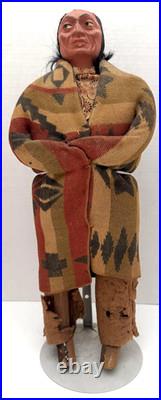
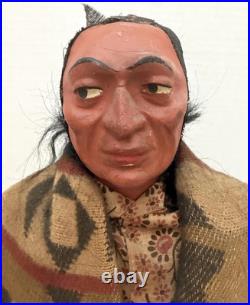
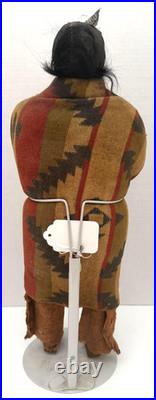
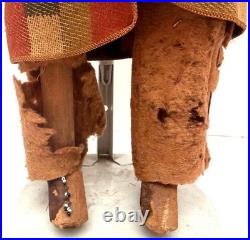
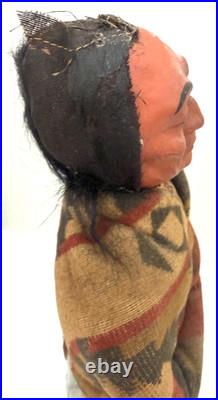

Vintage Large Male Skookum Native American Themed Souvenir Indian Doll in Blanket Wrap by Mary Dwyer McAboy 18.5 on Stand. MALE SKOOKUM NATIVE AMERICAN THEMED SOUVENIR DOLL. This is a vintage Skookum doll. It typically features a composition face and is often wrapped in a blanket material. These dolls were popular in the early 20th century, with some dating back to the 1920s or 1930s. Skookum dolls are iconic, Native American-themed souvenir dolls that were highly popular commercial toys and collectibles from 1913 until the 1960s. Despite their appearance, they are NOT authentic Native American cultural objects; they were created by a non-Native woman named Mary Dwyer McAboy in Missoula, Montana, and mass-produced for the tourist trade. Origin and the “Skookum” Name. Mary McAboy began making the dolls by hand around 1913 and obtained a U. Patent for her design in 1914. The word “Skookum” originates from the Chinook jargon of the Pacific Northwest, translating generally to meanings like “strong, ” “excellent, ” “brave, ” or “bully good”. McAboy marketed them under the slogan “The Great Indian Character Doll, ” styling them with generic Pueblo, Sioux, or Apache aesthetic features to sell at Western trading posts, tourist spots, and train stations. The specific construction materials used over the decades provide a clear timeline for dating a Skookum doll. Their inner structures consisted of simple wooden blocks or sticks stuffed with dried grass, leaves, or twigs, wrapped tightly in textile blankets. Dolls from this timeframe typically have wooden legs and feet covered in leather or suede. 1940s-1960s (Plastic Era): In later production years, the heads, legs, and shoes were entirely replaced with molded plastic. The “Glance”:Skookum dolls almost never look straight ahead. Their eyes are intentionally painted looking to the side (usually to the right). No Visible Arms: The structural design focuses entirely on the outer blanket wrap. The doll’s arms are not modeled separately; instead, they are hidden entirely under the blanket fabric to give the continuous suggestion of arms crossed underneath. Sizes: Production expanded from tiny 3.5-inch “papoose” babies to massive 34-inch models intended for retail store displays. Condition: Lower half has torn clothing material that is missing. May have other minor small imperfections.